
What These Policy Types Actually Mean
Agreed Value
Value locked in at policy inception
How it works
When you purchase the policy, you and your insurer agree on your yacht's value (usually based on a recent survey or appraisal). This value is stated in your policy declarations.
In a total loss
You receive the agreed value amount, less any deductible that applies (many yacht policies waive it on a total loss). No depreciation calculation. No negotiation over value.
Cost
Typically higher premiums than ACV policies (the gap varies by insurer and yacht), but you're paying for certainty.
Actual Cash Value (ACV)
Market value at time of loss
How it works
Your policy covers your yacht's current market value, which is determined at the time of loss. This accounts for age, condition, depreciation, and market conditions.
In a total loss
The insurer evaluates comparable yacht sales, applies depreciation, and pays what your yacht was “actually worth” when it was lost.
Cost
Lower premiums than Agreed Value, but you bear the depreciation risk.
Side-by-Side Comparison
| Feature | Agreed Value | Actual Cash Value (ACV) |
|---|---|---|
| How value is determined | Agreed upon when policy is written, based on survey/appraisal | Calculated at time of loss based on market comparables |
| Depreciation applied? | Not on the total-loss figure; some wear items may be depreciated on partial losses | Yes — reduces payout as the yacht ages |
| Total loss payout certainty | Stated in the policy (for a covered loss) | Unknown until claim is settled |
| Premium cost | Typically higher (gap varies by insurer and yacht) | Lower |
| Required by lenders? | Often required or preferred | Often not accepted by lenders |
| Partial loss claims | Repair cost paid (minus deductible); wear items such as sails, canvas, or outboards may be depreciated per wording | Repair cost paid, but depreciation may apply to replaced parts |
| Best for | Financed yachts, newer vessels, owners who want certainty | Older vessels, owners comfortable with market risk |
| Renewal considerations | Value can be adjusted up or down at renewal based on new survey | Coverage limit may decrease over time as yacht ages |
Real-World Examples: What You Actually Get Paid
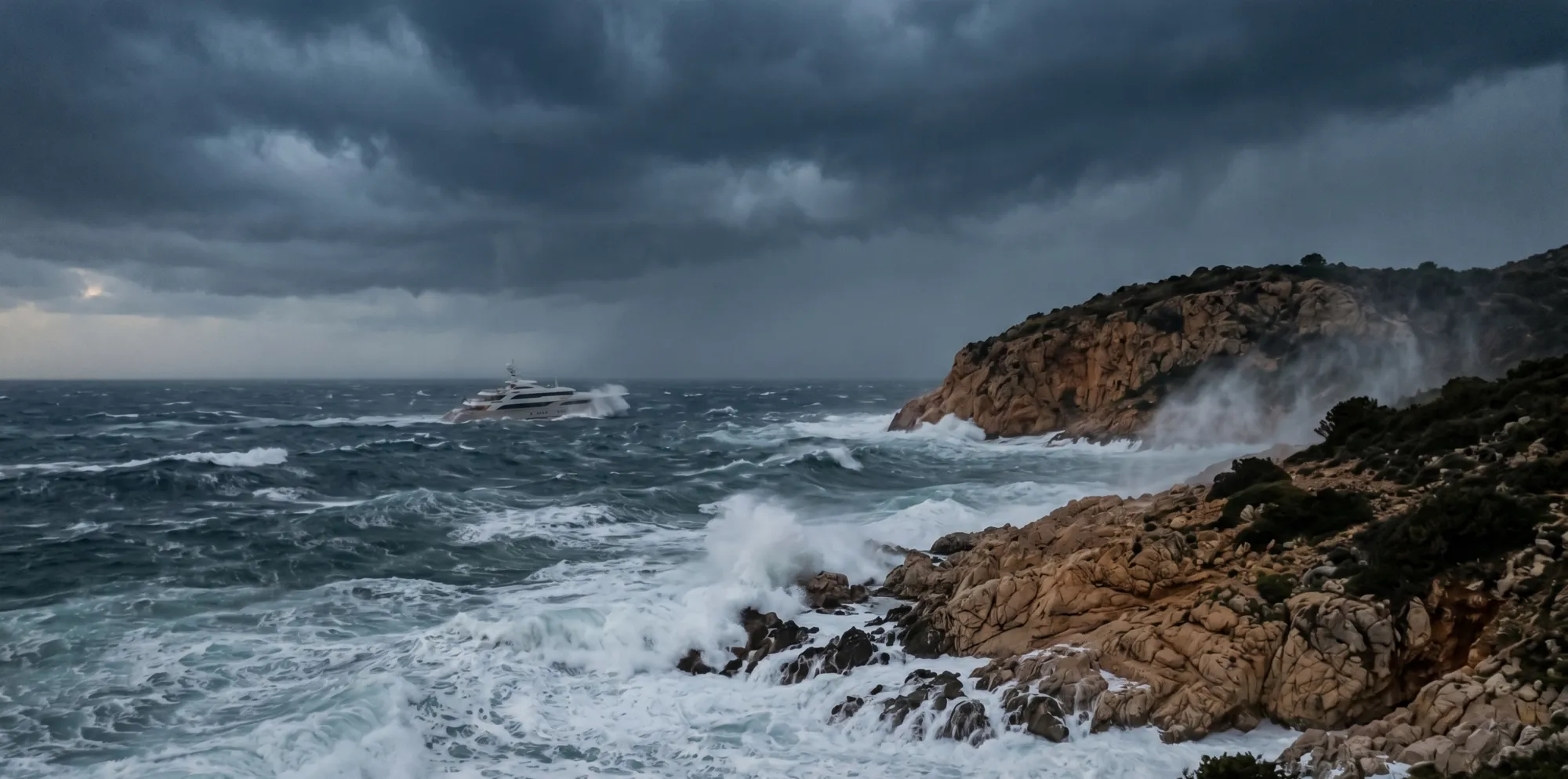
Example 1: Total Loss — Hurricane Sinks Your Yacht
Scenario
- 2019 Sunseeker 68 Sport Yacht
- Purchase price: $2,100,000 (new in 2019)
- Current year: 2026 (yacht is 7 years old)
- Recent upgrades: $80,000 in new electronics and interior refresh
- Hurricane causes sinking — declared total loss by surveyor
- Deductible: $5,000
Agreed Value Policy
No argument over the yacht's value. Timing depends on the insurer and your state's claims rules. Many policies waive the deductible on a total loss.
Actual Cash Value Policy
Settlement can take longer if the valuation is disputed. Your $80K in upgrades may not be fully recognized.
The difference
$270,000
more from Agreed Value than ACV in this total loss — 19.6% more in your pocket.
Even if the Agreed Value policy cost $3,500/year more in premiums over 7 years ($24,500 total), you're still ahead by $245,500.
Example 2: Partial Loss — Grounding Damage
Scenario
- 2021 Princess 60 Motor Yacht
- Grounding incident damages hull, running gear, and one shaft
- Survey determines: NOT a total loss (repairable)
- Repair estimate: $95,000
- Deductible: $2,500
Agreed Value Policy
Illustrative: no depreciation on the hull and shaft repairs. Many agreed value wordings still depreciate wear items (sails, canvas, some machinery).
Actual Cash Value Policy
You pay depreciation on replaced parts. Out-of-pocket: $21,500 instead of $2,500.
The depreciation hit
$19,000
out of pocket on ACV — the depreciation applied to replaced parts on a repairable grounding.
Important note on partial losses
How ACV applies to partial losses varies by policy. Some ACV policies cover full repair costs but depreciate your total insured amount over time. Others apply depreciation to individual replaced parts. Always read your policy's “Basis of Recovery” or “Valuation” clause.
When ACV Surprises Owners (And Not in a Good Way)
Some yacht owners don't realize they have an ACV policy until they file a claim. Here are the most common scenarios where ACV creates unexpected problems:
1. You Still Owe More Than the Payout
Your yacht is totaled, but you still have $1,200,000 on your loan. Your ACV policy pays $1,050,000. You're personally responsible for the $150,000 gap, plus you no longer have a yacht.
This is why lenders typically require hull cover at least equal to the loan, and many require or prefer Agreed Value.
2. You Made Significant Upgrades That Aren't Recognized
You spent $120,000 on new engines, electronics, and interior upgrades last year. In a total loss, the ACV adjuster says “comparable yachts without those upgrades sell for X” and only credits you $40,000 of your investment.
With Agreed Value, you can include recent upgrades in your agreed amount (with documentation/receipts).
3. The Market Has Softened Since You Bought
You bought your yacht in 2021 when the market was hot for $900,000. In 2026, similar yachts are selling for $650,000 due to market conditions. Your ACV payout reflects the current depressed market, not what you paid.
Agreed Value protects you from market fluctuations during the policy term. The value is set at inception and reviewed at renewal.
4. Your Yacht Is a Unique or Low-Production Model
You own a custom-built expedition yacht or a rare model with only 12 built. When determining ACV, the adjuster struggles to find comparables and lowballs the valuation because “there's no established market.”
Unique yachts are generally better suited to an Agreed Value basis using a qualified marine surveyor's appraisal.
5. The Claims Process Becomes a Fight
After a total loss, you and the insurer disagree on the ACV calculation. They say $780,000. You say $950,000. You hire your own appraiser. The settlement drags out for 9 months while you're making loan payments on a sunken yacht.
Agreed Value removes the argument over value. The figure is stated in black and white on your policy declarations.
Bottom line
ACV policies shift the risk of depreciation and market fluctuations onto you. In exchange, you typically pay a lower premium. For many yacht owners, especially those with financed or relatively new vessels, Agreed Value is worth the extra cost.
Which Policy Type Should You Choose?
Choose Agreed Value If:
- You have a loan/mortgage on your yacht
- Your yacht is relatively new
- You want certainty about payout in a total loss
- You've made significant upgrades or customizations
- Your yacht is a unique, rare, or custom-built model
- You want to avoid claims disputes over valuation
- You operate in high-risk areas (Florida, Caribbean hurricane zones)
Consider ACV If:
- Your yacht is fully paid off (no loan)
- Your yacht is older and much of its depreciation has already occurred
- You're comfortable with uncertainty in a total loss scenario
- You prioritize lower premiums over payout certainty
- You have cash reserves to cover a potential valuation gap
- Your yacht is a common production model with clear market comparables
Industry recommendation
Agreed Value is the usual basis for yacht hull cover, and major yacht insurers build their standard policies around it; ACV is typically offered as a way to reduce premium. For a financed or relatively new yacht, the premium difference is often small compared with the potential payout gap in a total loss.
For vintage, classic, or much older yachts, discuss both options with your broker. Some older vessels are better suited to ACV policies where the depreciation has mostly occurred.
Frequently Asked Questions
- Can I switch from ACV to Agreed Value mid-policy?
- Usually not mid-term, but you can change at renewal. You'll likely need a current marine survey or appraisal to establish the agreed value. Some insurers allow mid-term changes if you're refinancing or have a triggering event; expect to pay any premium difference, and possibly a fee.
- How is the agreed value determined when I buy a policy?
- Typically based on a recent marine survey (how recent depends on the insurer and the yacht's age and value), a professional appraisal, or purchase documentation if recently acquired. The insurer reviews the documentation and either accepts your proposed value or negotiates. Once agreed, it's stated in your policy declarations.
- Does my agreed value stay the same every year?
- Not necessarily. At each policy renewal, the agreed value can be reviewed and adjusted up or down based on a new survey, market conditions, or your yacht's condition. Any change has to be agreed between you and your insurer. If your yacht has appreciated (rare vintage models, for example), you can increase the agreed value. If it's depreciated, the insurer may reduce it.
- What happens if I over-insure on an Agreed Value policy?
- The agreed value is an underwriting decision: insurers set it from surveys, purchase records, and comparables, and generally won't agree a figure they can't support. Once agreed, it binds both sides in a covered total loss, even if market value later turns out lower. Marine insurance requires utmost good faith, so misrepresenting price, condition, or value to inflate the figure can let the insurer void the policy, and a deliberate scheme to profit from a loss is fraud.
- Do I still need a survey if I have an ACV policy?
- Possibly. Many insurers still require a recent survey for underwriting purposes, especially for yachts over a certain age or value, even on ACV policies. The survey helps the insurer assess condition and risk, even though the payout won't be based on the surveyed value. Always check your insurer's requirements.
- Can I have Agreed Value on hull coverage and ACV on something else?
- Yes. It's common to have Agreed Value for your hull and machinery coverage (the physical yacht) while having ACV or stated amounts for specific equipment like tenders, jet skis, or personal effects. Discuss with your broker how each component of your policy is valued.
- How do total loss thresholds work with Agreed Value vs ACV?
- There is no universal percentage; each policy sets its own total-loss test. Many Agreed Value wordings treat the yacht as a total loss when the reasonable cost of repair would exceed the agreed value, while the classic marine rule looks at whether repair would cost more than the vessel would be worth once repaired. On an ACV policy, the comparison is typically made against the actual cash value at time of loss. This means an ACV yacht might be totaled in scenarios where an Agreed Value yacht would be repaired, or vice versa.
- What's the typical premium difference between Agreed Value and ACV?
- Agreed Value policies typically cost more in annual premiums than ACV policies, all else being equal, but there is no standard percentage. The difference depends on your yacht's age, value, where it's kept, and the insurer, so the only reliable way to know is to get both bases quoted on the same yacht. Given the potential payout difference in a total loss, many owners find the extra premium worthwhile.
- Does charter use affect Agreed Value vs ACV?
- Policy basis (Agreed Value vs ACV) is separate from use (private vs charter). However, commercial charter hull cover is commonly written on an Agreed Value basis, and charter use must be declared to and accepted by your insurer. If you're considering chartering your yacht, discuss the valuation basis with your broker.
How This Fits Into Your Overall Yacht Insurance
The Agreed Value vs ACV decision is part of your Hull and Machinery (H&M) coverage, which protects the physical yacht itself. Your complete yacht insurance package typically includes:
Hull & Machinery Coverage
Physical damage to your yacht — this is where Agreed Value vs ACV applies.
Learn more about H&M coverage →Protection & Indemnity (P&I)
Liability for injury and damage to others. ACV vs Agreed Value doesn't apply here.
Learn more about P&I coverage →Return to our main Yacht Insurance Guide for a complete overview of coverage types, exclusions, and what to ask your broker.